Daily Pulse · · 20:00 CET · 3 min read · market · XSD


In this edition
The breadth warning has become price confirmation. This leg of the semiconductor bull is over — not the structural story, the parabola.
On Tuesday, 02 June I wrote that the troops were leaving before the generals — arguing for a short-term top in semiconductors. The signal was XSD, the equal-weight semiconductor ETF, which had stopped confirming the mega-cap-led advance while SMH kept climbing.
That warning has now turned into price confirmation.
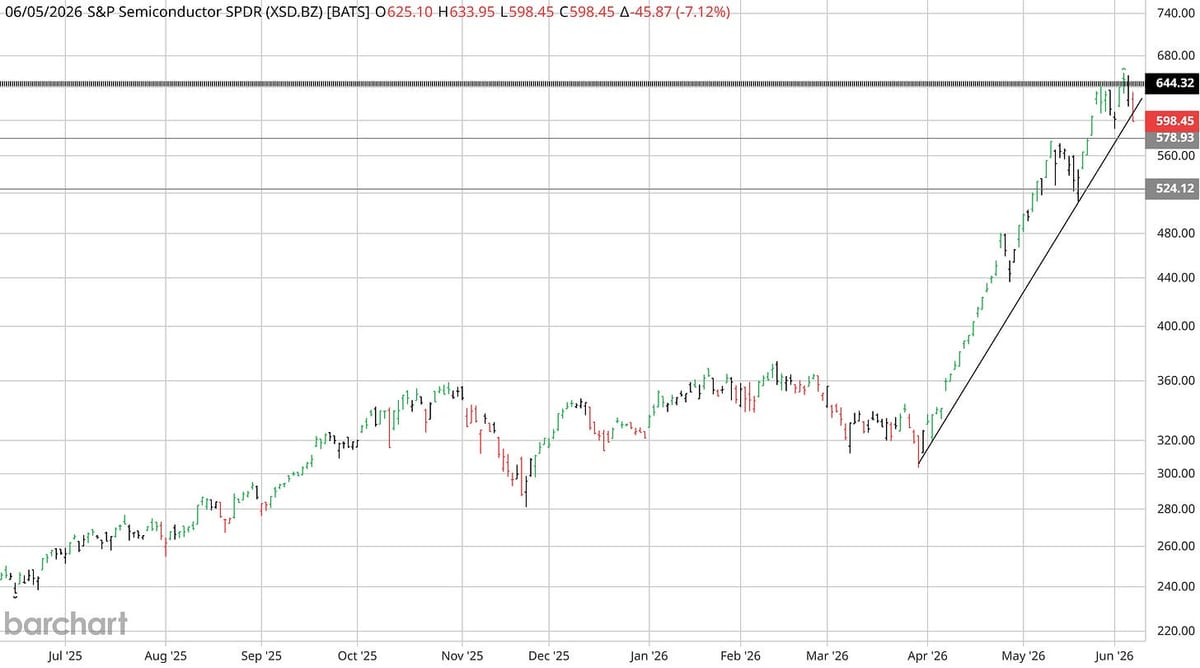
The channel has broken
XSD is breaking down hard today, testing — likely breaking — the steep upward channel in place since the late-March low. Last 598.45, down −7.12% on the session. If that break holds into the close, the April–June leg of the second-tier semiconductor bull should be treated as over.
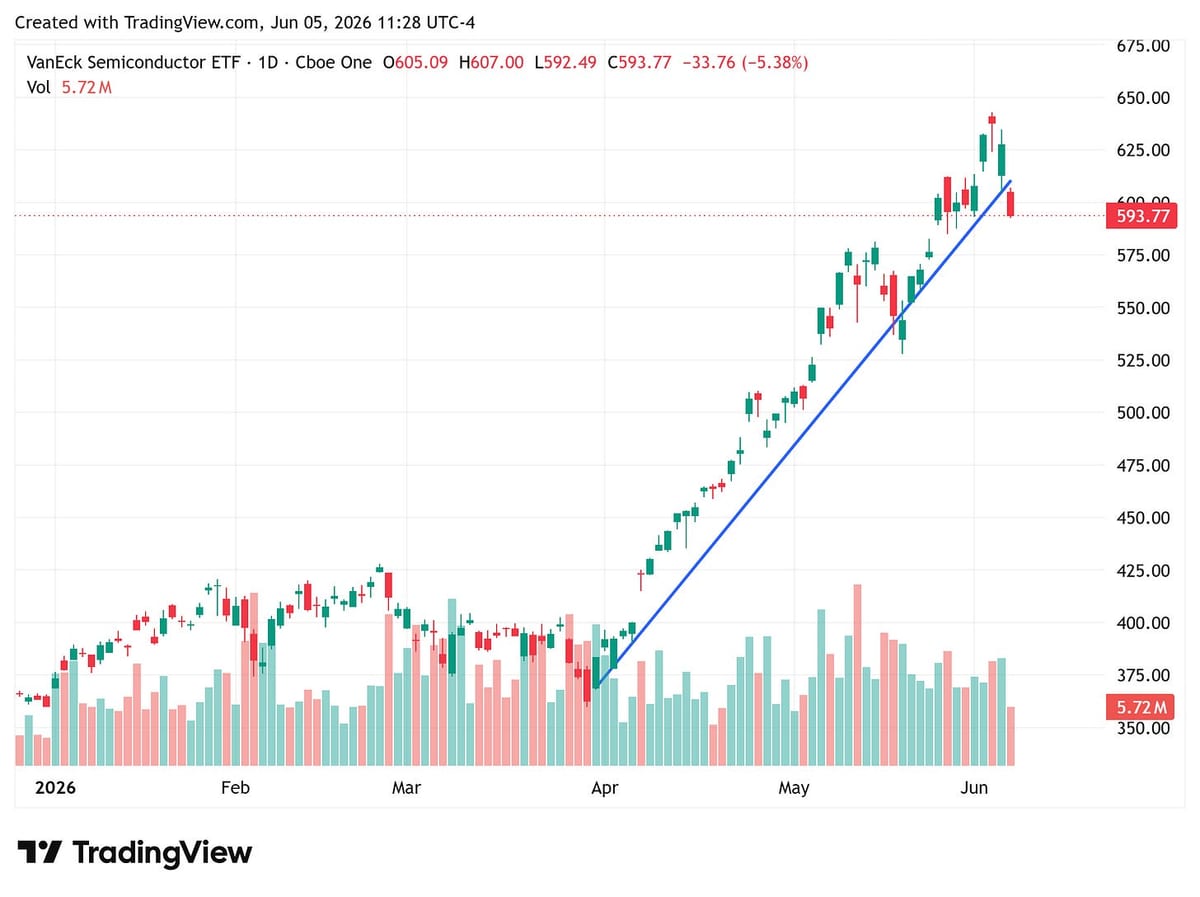
And the generals are no longer holding the line. SMH — the cap-weighted complex carried by the mega-caps — is down −5.38%, now testing its own April-low trendline. SMHX, the fabless basket, −5.99%. The Tier-1 names that carried the advance have started to follow the second tier down.
C — free account
The free C account unlocks the full Daily Pulse — every section of this read.
One tap with Google or one email — no password, no card. You are signed in until you sign out, on this browser, from then on.
Join the Look — freeAlready joined on this browser? The full edition shows automatically — if it doesn't, sign in again here. Looking for the archive, portfolios and realtime? That is C+.