Daily Pulse · · 20:00 CET · 4 min read · market · XSD

In this edition
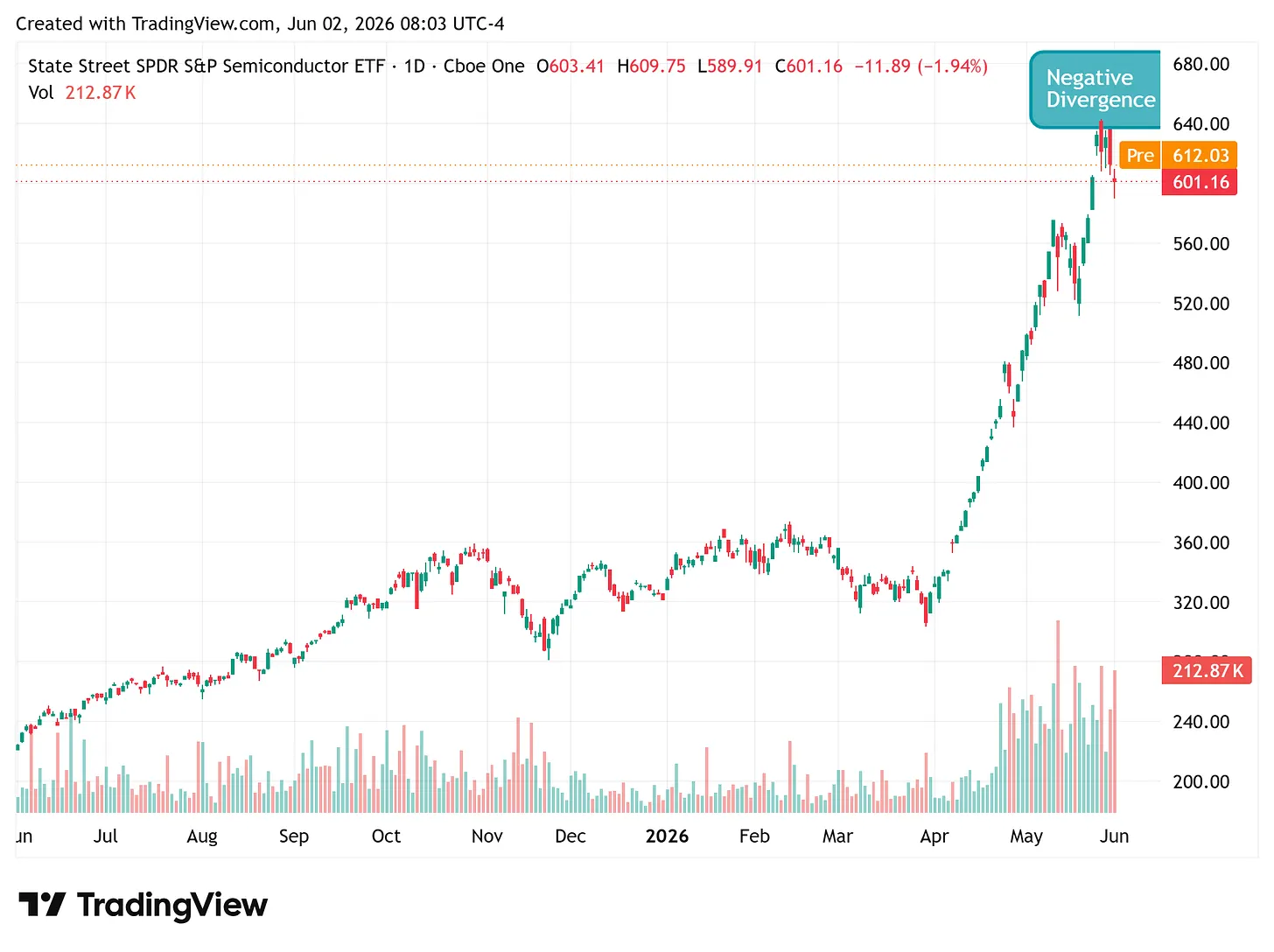
A short-term top in second-tier semis is likely in place — not the end of the bull, an early-warning shot.
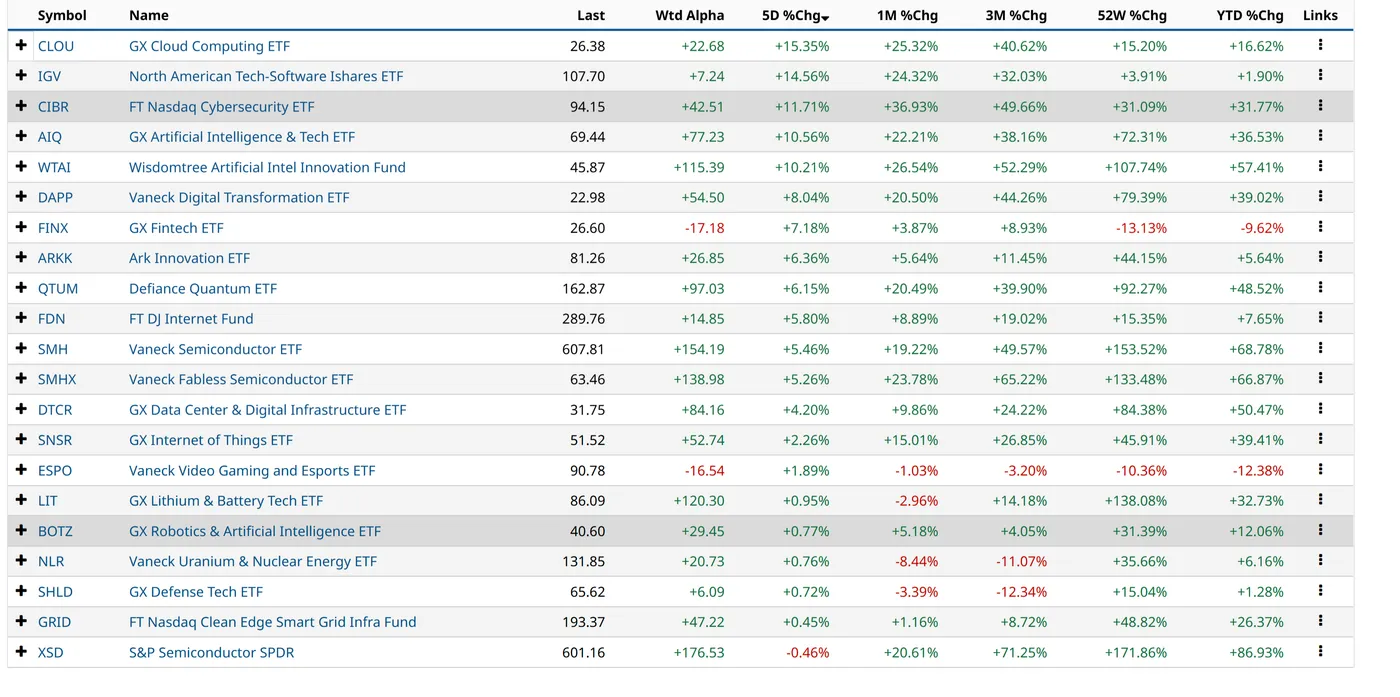
Two semiconductor ETFs are telling two different stories today, and the gap between them is the signal.
SMH — the cap-weighted complex, carried by the mega-cap names — is still climbing: +5.46% over five days, green on the day. XSD — the equal-weight S&P semiconductor index, where the smaller and second-tier chip names actually carry weight — has rolled over: −0.46% on five days and −1.94% in the last session, last 601.16 into a negative divergence off the April-low high. In a watchlist of twenty-plus tech ETFs, XSD is the only name printing red over five days.
That is not noise. That is breadth. When the equal-weight version of a sector turns down while the cap-weighted version keeps rising, the move is being carried by fewer and fewer names. The generals are holding the line; the troops have already started to retreat.
Why XSD is the cleaner gauge here
SMH is a mega-cap fund — NVIDIA and Broadcom carry it. XSD is the inverse by construction: a modified equal-weight basket of roughly 43 names. The numbers make the point better than any chart can.
So XSD doesn't measure “semis.” It measures the second tier — and the second tier has stopped going up.
XSD — top weights (the second tier that drives it):
| Holding | Weight |
|---|---|
| MXL | 6.24% |
| ALAB | 4.09% |
| AMD | 3.74% |
| NVTS | 3.62% |
| INTC | 3.56% |
The diluted mega-caps:
| Holding | Weight |
|---|---|
| QCOM | 2.78% |
| TXN | 2.29% |
| AVGO | 1.95% |
| ADI | 1.93% |
| NVDA | 1.69% |
XSD constituents, 02 Jun 2026. Weights drift; date-stamped for that reason.
And look at what's actually driving XSD. The heavy weights are the high-beta speculatives: Astera Labs (4.09%), Navitas (3.62%), Credo (3.03%), SiTime (3.01%), Rigetti (2.24%), Ambarella, Wolfspeed. This is exactly the cohort that runs hardest in the everyone-up phase — and breaks first when leadership narrows. When this basket turns red while NVDA-heavy SMH is green, you are watching the marginal buyer leave the riskiest end of the trade.
C — free account
The free C account unlocks the full Daily Pulse — every section of this read.
One tap with Google or one email — no password, no card. You are signed in until you sign out, on this browser, from then on.
Join the Look — freeAlready joined on this browser? The full edition shows automatically — if it doesn't, sign in again here. Looking for the archive, portfolios and realtime? That is C+.