Daily Pulse · · 08:30 CET · 1 min read · framework

Most investors are still underwriting agent adoption based on today's inference costs. That misses the cost deflation happening at the software layer, not just the model layer.
TurboQuant is one example. But it's just one layer of a broader optimization stack arriving simultaneously: speculative decoding, routing, distillation, sparsity and quantization, context caching. Stacked together, these are multiplicative. A workflow that costs $3–5 today will fall to cents.
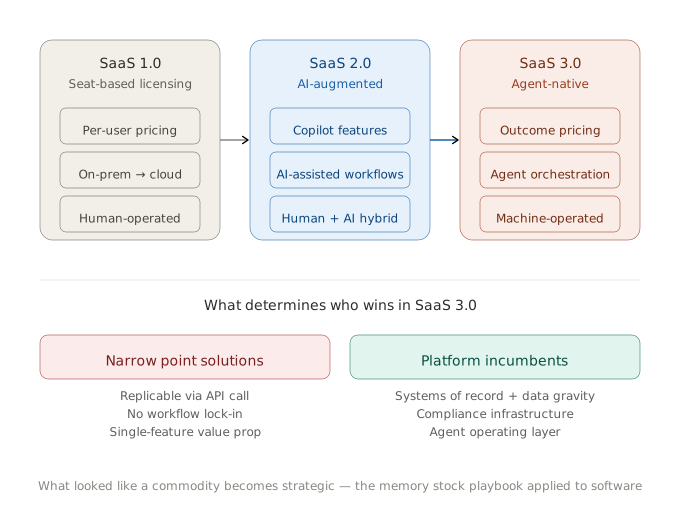
The consensus bear case for SaaS has been straightforward: agents disintermediate seat-based software. Lower inference costs flip the question. From "which software gets replaced" to "which platforms are best positioned to deploy agents at scale."
Agents need systems of record, workflow integration, permissions, compliance, security, and proprietary enterprise data. That creates advantages for incumbent platforms with deep workflow embedding, trusted distribution, and data gravity.
The companies most at risk are narrow point solutions replicable via API call. The companies with structural advantages operate within mission-critical workflows and can serve as the operating layer for enterprise agents.
This setup resembles memory stocks before the AI re-rating. What looked like a commodity became strategic. Some of the most interesting AI winners may be enterprise software incumbents the market is still treating as casualties.
C — free account
The free C account unlocks the full Daily Pulse — every section of this read.
One tap with Google or one email — no password, no card. You are signed in until you sign out, on this browser, from then on.
Join the Look — freeAlready joined on this browser? The full edition shows automatically — if it doesn't, sign in again here. Looking for the archive, portfolios and realtime? That is C+.