Private equity's playbook for software acquisitions is well-documented: buy a SaaS company, load it with debt (typically 8-10x EBITDA), cut costs, and extract cash flow. The model works because SaaS has historically had predictable, sticky revenue — 90%+ gross margins and 95%+ net retention. Lenders accept high leverage because the cash flows seem certain.
Agentic AI breaks this assumption. If an agent replaces the workflow a SaaS product automates, the customer churns. Not because of a competitor — because of a category shift. Net retention drops below 100%. Margins compress as companies spend to pivot. The debt stays the same while the cash flow shrinks.
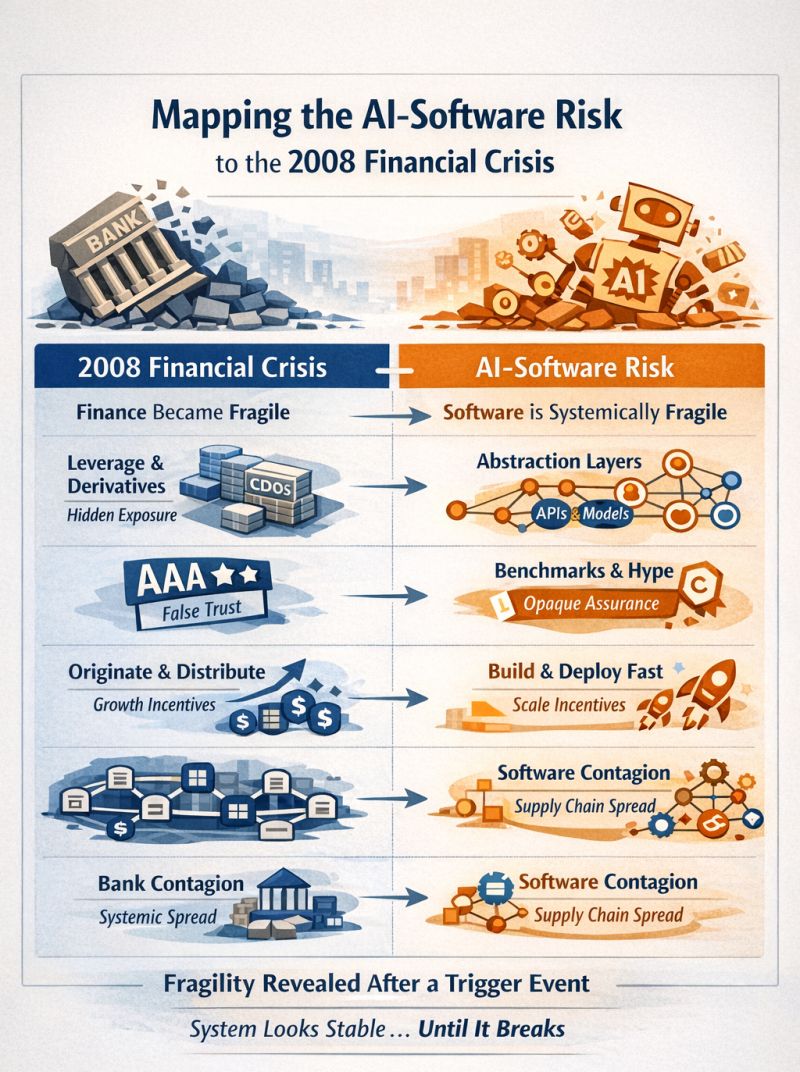
Hundreds of PE-owned software companies have been acquired in the past five years at peak multiples with peak leverage. Many are housed in private credit vehicles that institutional investors — pension funds, endowments, insurance companies — have allocated to as a "safe yield" alternative. The Software-Credit Nexus argues this is concentrated, correlated risk that the market is not pricing.
The nexus is not a trade — it's a risk awareness framework. It suggests: avoid private credit funds with heavy software concentration, monitor public SaaS companies with PE-comparable leverage, and recognize that the SaaSpocalypse is not just an equity story — it's a credit story.
The full Software-Credit Nexus analysis is one of Closelook's most widely-read dossiers. It connects the SaaSpocalypse thesis (equity) to private credit risk (fixed income) — showing that AI disruption has second-order effects beyond stock prices.
Full Dossier — Software-Credit Nexus →SaaSpocalypse →ABR Framework →